hydrojetuhpl@gmail.com |
 Cabinet Parts Washer
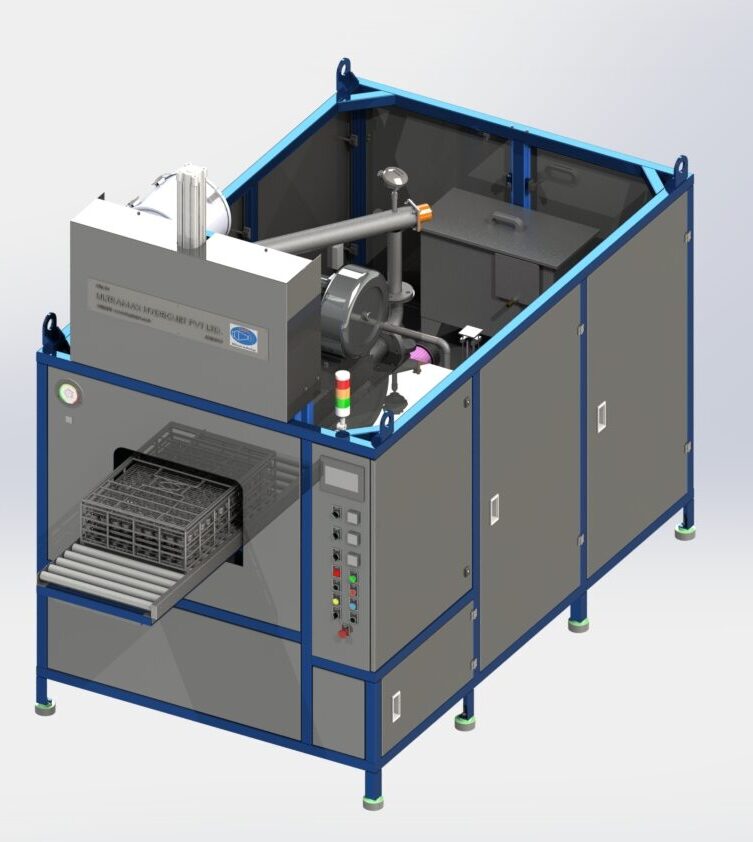
Cabinet Parts Washer for Enclosed High-Pressure Cleaning
A cabinet parts washer is a compact, enclosed machine that uses high‑pressure spray to clean components inside a sealed chamber. Parts are loaded on a tray or turntable, the door is closed, and automated wash, rinse and drying cycles run without operator exposure to spray or fumes.
Designed as an industrial cabinet washer, this system is ideal when you need reliable, repeatable cleaning of small and medium parts in workshops, maintenance shops and production cells, with minimal floor space and easy operation.
What Is a Cabinet Parts Washer?
A cabinet washing machine is essentially a “closed‑box” spray wash cabinet. Once the door is shut, pumps deliver heated detergent through strategically placed nozzles, hitting the parts from multiple directions. Rinse and blow‑off or hot air drying can be included in the same cycle.
Because cleaning takes place inside a sealed spray cabinet parts washer, operators are protected from splashing and vapours, while noise and heat are contained. This makes cabinet systems especially suitable as an automotive parts washer cabinet in service centres and component rebuild shops
Hot Water and Heated Cabinet Washer Performance
To remove oils, grease and stubborn soils efficiently, the machine operates as a heated parts washer cabinet, using controlled temperature and chemistry. Detergent in a hot water parts washer cabinet breaks down contamination faster, shortens cycle times and improves overall cleanliness.
With insulated tanks and chambers, a hot water parts washer cabinet maintains temperature while minimising energy usage. This combination of heat, chemistry and high‑pressure spray is what delivers fast, repeatable cleaning.
Key Features of Our Spray Cabinet Parts Washers
Our spray cabinet parts washer range is engineered for industrial duty:
- High‑pressure pumps feeding fixed or oscillating spray manifolds for powerful impact.
- Turntable or fixed rack for efficient loading in the cabinet washing machine.
- Programmable cycles for wash, rinse and optional dry, controlled via PLC/HMI.
- Double‑skin construction and door seals to keep the spray wash cabinet quiet and clean.
Options include oil skimmers, filtration upgrades and rust inhibitor dosing, turning the unit into a versatile high pressure parts washer cabinet suitable for continuous use.
Typical Applications – From Workshops to Production Cells
A cabinet parts washer is used wherever enclosed, batch cleaning is preferred:
- Engine blocks, cylinder heads, gearboxes and brake components in an automotive parts washer cabinet configuration.
- General engineering parts, fixtures and tools in workshops and CNC cells.
- Maintenance, repair and overhaul (MRO) facilities cleaning used components before inspection or rework.
For smaller shops, a compact cabinet washer replaces manual solvent tanks, while in production cells it works as a quick, reliable step between machining and assembly.
Typical Specifications
Use values aligned with your standard models:
|
Specification |
Value (example) |
Notes |
|
Machine type |
Enclosed cabinet parts washer |
Batch spray wash system |
|
Work area (turntable) |
600mm-2000mm |
Other sizes on request |
|
Load height |
400–600 mm |
Depends on component size |
|
Load capacity |
250–500 kg |
For high pressure parts washer cabinet duty |
|
Spray pressure |
3–6 bar (adjustable) |
High‑impact spray |
|
Wash stages |
Wash / Rinse / Optional Dry |
Single or multi‑stage |
|
Bath volume |
300–600 litres |
With overflow weir |
|
Heating system |
Electric |
For hot water parts washer cabinet operation |
|
Operating temperature |
55-75 C |
PLC‑controlled |
|
Filtration |
Gravity Filter+ Online Filter (Paper band Optional) |
Protect nozzles and parts |
|
Oil removal |
Skimmer Or Separator |
Extends bath life |
|
Controls |
PLC + HMI |
Recipe‑based cycles |
|
Construction |
Stainless steel (wetted parts) SS304 |
Industrial build |
|
Options |
Drying stage, rust‑prevent dosing, load carts |
Tailored to application |
Parts Washer Cabinet for Sale – What You Get
When you look for a parts washer cabinet for sale, the real value is in the engineering behind the box:
- Correctly sized pump and nozzle arrangement for your parts and contamination.
- Robust turntable drive and sealing for long‑term use in a spray cabinet parts washer.
- Service‑friendly layout so filters, pumps and heaters are accessible from the front or side.
This approach ensures your cabinet washing machine delivers consistent performance, not just a low initial purchase price.
Frequently Asked Questions
When should I choose a cabinet parts washer instead of a conveyor or rotary system?
Choose a cabinet parts washer when you need enclosed, batch cleaning of small and medium parts, especially in high cleanliness requirements or components with intricate holes and designs where you can’t clean with spray or ultrasonic cleaning alone. If your production is continuous and high‑volume, a conveyor system is better; for medium batches needing full rotation, a rotary basket machine might be ideal. A cabinet washer is the best fit for flexible, small‑batch, enclosed cleaning.
What types of contaminants can a cabinet washing machine remove?
A properly configured cabinet washing machine can remove oils, grease, cutting fluids, light rust preventives and shop dirt. In a high pressure parts washer cabinet, heated detergent and strong spray impact work together to dislodge contamination from cavities, blind holes and complex surfaces.
Are cabinet parts washers compatible with hot water and detergents?
Yes. Most modern systems are designed as heated parts washer cabinets using aqueous detergents at controlled temperatures. Operating the unit as a hot water parts washer cabinet improves cleaning performance and reduces reliance on hazardous solvents, while providing a safer environment for operators.
Can a cabinet parts washer be used for automotive components?
Absolutely. An automotive parts washer cabinet can be tailored with appropriate fixtures, baskets and cycles for engine blocks, cylinder heads, brake components, gearboxes and other vehicle parts. The enclosed spray wash cabinet keeps workshops cleaner and provides more consistent results than manual washing.
What should I look for when evaluating a parts washer cabinet for sale?
Beyond price, check build quality, material of construction, pump size, heating capacity, insulation and access for maintenance. A good spray cabinet parts washer should have robust door seals, easy‑to‑clean filters, and sufficient tank volume. Consider whether the parts washer cabinet for sale can be upgraded with drying, extra filtration or rust inhibitor dosing as your requirements grow.