hydrojetuhpl@gmail.com |
 Rotating Parts Washer
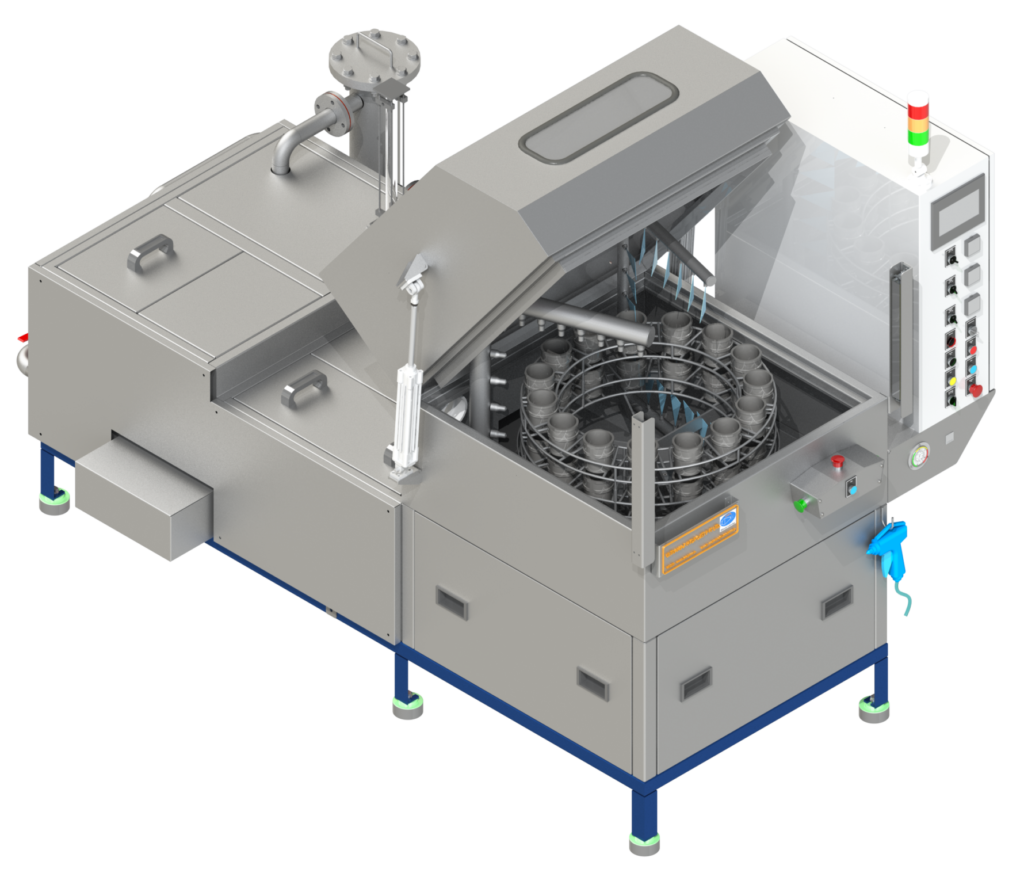
What Is a Rotating Parts Washer?
A rotating parts washer uses a motor‑driven basket or fixture that slowly rotates while high‑pressure spray nozzles apply heated detergent and rinse water. As the basket turns, every face of the part passes through the spray, improving coverage compared to fixed‑rack systems.
This rotary design makes the washer a highly efficient component washer for small and medium parts such as gears, shafts, brackets, housings and other machined components that demand reliable component washing before assembly or coating.
Rotary Basket Parts Washer – Key Advantages
A rotary basket parts washer offers several advantages over static spray tanks and manual cleaning:
- Full 360° coverage of complex parts through controlled basket rotation.
- Compact footprint and simple loading, ideal as a workshop parts washer or cell‑based machine in production.
- Better penetration of oil, chips and fine particulates thanks to combined rotation and nozzle design.
- The combination of rotation and targeted spray allows this spray parts washer to achieve high cleanliness levels with shorter cycle times.
Aqueous Parts Washers for Safe, Clean Operation
Modern rotary systems are typically designed as aqueous parts washers, using water‑based detergents instead of solvents. This improves operator safety and simplifies effluent management while maintaining strong cleaning performance.
Temperature, concentration and cycle time are controlled automatically, so the industrial component washing machine can deliver consistent results with minimal supervision. Integrated filtration and oil removal extend bath life and reduce chemical consumption.
Typical Applications for Rotating Parts Washers
A rotating parts washer is widely used wherever batch cleaning of small and medium components is needed:
- Automotive and engineering workshops as a high‑performance workshop parts washer.
- Machine shops for component washing between machining and assembly or inspection.
- Maintenance, repair and overhaul (MRO) facilities for cleaning used parts before rework.
By changing baskets or fixturing, the same component washer can handle different parts while maintaining stable quality.
Rotating Parts Washer – Typical Specifications
|
Specification |
Value (example) |
Notes |
|
Machine type |
Rotary basket rotating parts washer |
Batch component cleaning |
|
Basket size |
600mm-2000mm |
Custom sizes available |
|
Load capacity |
Depending on Basket Size |
Depends on model |
|
Washing stages |
Wash / Rinse / Blow‑off / Dry |
1–4 stages |
|
Spray pressure |
3–6 bar (adjustable) |
High‑impact spray parts washer |
|
Pump capacity |
3–10 m³/hr per stage |
Continuous‑duty pumps |
|
Bath volume |
250–500 litres per tank |
With overflow weir |
|
Heating system |
Electric / Steam |
For aqueous parts washers |
|
Operating temperature |
45–70 °C |
PLC‑controlled |
|
Filtration |
Basket strainers + cartridge filters |
Protect nozzles and components |
|
Oil removal |
Skimmer / coalescer |
Extends bath life |
|
Controls |
PLC + HMI |
Recipe‑based operation |
|
Construction |
Stainless steel (wetted parts) SS304 |
Industrial duty |
|
Options |
Rinse stage, rust‑prevent, extra drying |
Tailored to parts |
Why Choose Our Rotating Parts Washer?
Selecting the right rotating parts washer means balancing cleanliness, cycle time, floor space and running cost. A carefully engineered industrial component washing machine provides:
- Reliable, repeatable component washing with programmable recipes for different part families.
- Shorter, predictable cycles compared to manual or improvised workshop parts washer setups.
- Lower chemical and energy use through insulated tanks, efficient pumps and optimised spray patterns.
Each rotary basket parts washer can be customised with specific baskets, nozzle layouts and stages, so your parts exit clean, dry and ready for assembly or coating.
Frequently Asked Questions
What types of parts are best suited for a rotating parts washer?
A rotating parts washer is ideal for small and medium components that fit comfortably in a basket and require all‑round cleaning, such as gears, shafts, brackets, fittings and small housings. The rotating basket brings all faces through the spray pattern, making it an efficient component washer for general engineering, automotive and maintenance work.
How is a rotating parts washer different from a cabinet washer?
A cabinet workshop parts washer typically uses fixed racks or trays with stationary parts, whereas a rotating parts washer uses a turning basket. Rotation improves spray coverage and can reduce cycle time, especially for parts with recesses or blind holes. Both are spray parts washer designs, but rotary machines are usually preferred when consistent 360° coverage is critical.
Are rotating parts washers compatible with aqueous detergents?
Yes. Most modern rotary systems are designed as aqueous parts washers, using water‑based detergents at controlled temperature and concentration. This reduces solvent handling risks and simplifies environmental compliance, while the industrial component washing machine still achieves high cleanliness through mechanical action and optimised spray.
Can one rotating parts washer handle multiple part types?
A single rotating parts washer can clean multiple part types by changing baskets or fixtures and using different recipes in the control system. For example, you might have separate programs for small precision parts and heavier components, with adjusted time, temperature and spray pressure in the component washer.
What maintenance does a rotating parts washer require?
Routine maintenance includes cleaning filters, checking spray nozzles, monitoring detergent concentration and removing sludge from the tank. Regular inspection ensures the spray parts washer maintains consistent flow and pressure, and that the industrial component washing machine runs reliably with minimal unplanned downtime.