hydrojetuhpl@gmail.com |
 Traction Motor Cleaning Plant
Traction Motor Cleaning Plant for Railway Traction Motor Maintenance
A Traction Motor Cleaning Plant is a specialized system designed to clean railway traction motors and associated electrical equipment before inspection, maintenance or overhaul. These plants remove oil, grease, carbon dust, brake dust and environmental contaminants from motor housings, windings, commutators and cooling passages without damaging sensitive electrical components.
Engineered for safe, effective cleaning of electrical equipment, the Traction Motor Cleaning Plant uses controlled pressure, appropriate solvents or detergents, and drying systems to prepare motors for detailed inspection, rewinding or reassembly.
What Is a Traction Motor Cleaning Plant?
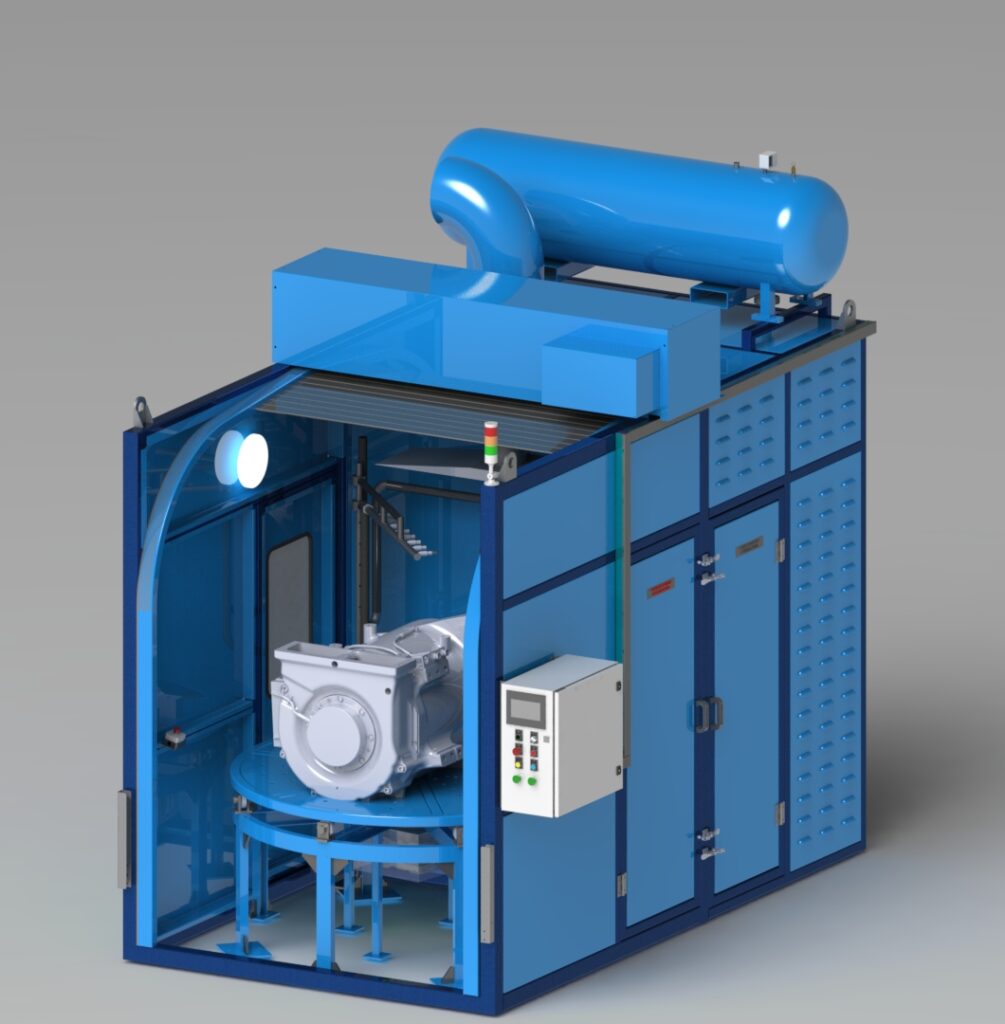
A Traction Motor Cleaning Plant is an enclosed or semi-enclosed system equipped with:
- Low to medium pressure spray jets suitable for electrical equipment (typically 10–50 bar).
- Solvent or aqueous detergent systems compatible with motor insulation and electrical components.
- Rotating fixtures or turntables to present motors to spray zones from multiple angles.
- Hot air drying or vapor-phase drying to ensure motors are completely dry before inspection or storage.
Unlike general parts washers, a traction motor cleaning plant is specifically designed to clean sensitive electrical components without causing short circuits, insulation damage or moisture retention.
Why Clean Traction Motors?
Proper cleaning of traction motors is critical in railway maintenance because:
- Inspection accuracy: Clean motor housings, windings and commutators allow technicians to detect cracks, insulation breakdown, carbon buildup and wear during visual and electrical testing.
- Performance: Removing carbon dust, oil and contamination from cooling passages and windings improves motor cooling and efficiency.
- Safety: Clean motors reduce the risk of electrical faults, arcing and fires caused by contaminated commutators or windings.
- Maintenance quality: Properly cleaned motors ensure better results during rewinding, bearing replacement and overhaul operations.
A Traction Motor Cleaning Plant standardizes cleaning across all motors, ensuring consistent preparation for maintenance and extending motor service life.
Traction Motor Cleaning Plant – How It Works
A typical traction motor cleaning process in an automated plant includes:
- Loading: The traction motor is positioned on a turntable or fixture inside the wash chamber, either manually via hoist or automatically via transfer system.
- Pre-Cleaning / Degreasing: Low-pressure spray or solvent mist removes bulk oil, grease and loose contaminants from motor housing and external surfaces.
- Rinse: Clean solvent or deionized water rinse removes cleaning agents and suspended contaminants.
- Drying: Hot air, vacuum drying or vapor-phase drying ensures the motor is completely dry, with no moisture in windings or insulation that could cause electrical faults.
- Detail Cleaning: Controlled-pressure spray (10–50 bar) with appropriate cleaning solution targets:
- Motor housings and end bells
- Cooling fins and air passages
- Commutators and brush holders
- Windings (if compatible with cleaning method)
- Bearing housings and seals
The entire cycle is controlled via operator panel or PLC, with adjustable pressure, temperature and time based on motor type and contamination level.
Traction Motor Cleaning Plant – Key Features
A well-designed Traction Motor Cleaning Plant includes:
- Controlled low-pressure spray: 10–50 bar to avoid damaging windings, insulation or commutators.
- Electrical-safe cleaning agents: Solvents or detergents compatible with motor insulation, varnishes and electrical components.
- Turntable or rotating fixture: Ensures uniform coverage of motor from all angles during cleaning.
- Enclosed chamber: Contains spray, vapors and runoff for operator safety and environmental compliance.
- Hot air / vacuum drying: Critical for removing all moisture from windings and insulation before motor is energized.
- Stainless steel construction: Corrosion-resistant materials suitable for solvent or aqueous cleaning environments.
- Operator controls: Manual or PLC-based control with pressure, temperature and time settings.
These features ensure the Traction Motor Cleaning Plant cleans effectively while protecting sensitive electrical components.
Traction Motor Cleaning Plant – Typical Specifications
Specification | Value (example) | Notes |
System type | Enclosed Traction Motor Cleaning Plant | Chamber with turntable |
Capacity | 4–8 traction motors per 8-hour shift | Depends on motor size and cycle time |
Motor types | DC traction motors, AC traction motors, auxiliary motors | Railway, metro, locomotive |
Cleaning method | Low-pressure spray (electrical-safe) | 10–50 bar |
Cleaning agents | Electrical-safe solvents or aqueous detergents | Compatible with insulation |
Turntable | Motorized rotation during wash cycle | For uniform coverage |
Applications – Where Traction Motor Cleaning Plants Are Used
A Traction Motor Cleaning Plant is essential in:
- Indian Railways: Loco sheds, electric loco maintenance depots and traction motor overhaul shops.
- Metro systems: Traction motor maintenance facilities for metro trains.
- Transit and light rail: Motor cleaning during scheduled maintenance and bearing replacements.
- Motor rewind shops: Pre-cleaning before disassembly, inspection and rewinding operations.
By using a dedicated Traction Motor Cleaning Plant, railway operators improve inspection quality, extend motor life and maintain electrical safety standards.
Benefits of a Traction Motor Cleaning Plant
Implementing a Traction Motor Cleaning Plant provides clear operational and safety benefits:
- Improved inspection accuracy: Clean motors allow technicians to detect insulation breakdown, carbon tracking, bearing wear and mechanical defects.
- Extended motor life: Removing contaminants from cooling passages and windings improves thermal performance and reduces overheating failures.
- Better maintenance outcomes: Clean motors ensure better quality during rewinding, commutator turning and bearing replacement.
- Worker safety: Enclosed cleaning reduces operator exposure to solvents, vapors and high-pressure spray.
- Consistent quality: Controlled cleaning cycles ensure every motor receives proper preparation, regardless of technician or shift.
Frequently Asked Questions
What is a Traction Motor Cleaning Plant used for?
A Traction Motor Cleaning Plant is used to clean railway traction motors and electrical equipment before inspection, maintenance or overhaul. It removes oil, grease, carbon dust and contaminants from motor housings, windings, commutators and cooling passages without damaging electrical components.
Can traction motors be cleaned with high pressure like other parts?
No. Traction motors require low to medium pressure (10–50 bar) to avoid damaging windings, insulation, commutators and delicate electrical components. A Traction Motor Cleaning Plant is specifically designed with controlled pressure suitable for electrical equipment.
What cleaning agents are safe for traction motors?
Electrical-safe solvents or aqueous detergents that are compatible with motor insulation, varnishes and electrical components are used. The cleaning agent must not attack insulation or leave conductive residues. Drying is critical to remove all moisture before motor operation.
How long does it take to clean one traction motor?
A typical Traction Motor Cleaning Plant completes a full wash, rinse and drying cycle in 30–60 minutes per motor, depending on motor size, contamination level and drying requirements. Proper drying is critical and cannot be rushed.
Where can I find Traction Motor Cleaning Plant manufacturers in India?
Ultramax Hydrojet manufactures Traction Motor Cleaning Plants for Indian Railways, metros and transit systems. We supply customized systems with electrical-safe pressure, appropriate cleaning agents, turntable rotation, PLC control and hot air/vacuum drying. Contact us in Chennai for specifications and motor shop visits.