hydrojetuhpl@gmail.com |
 Rail Wheelset Washing Plant
Rail Wheelset Washing Plant for Automated Wheel & Axle Cleaning
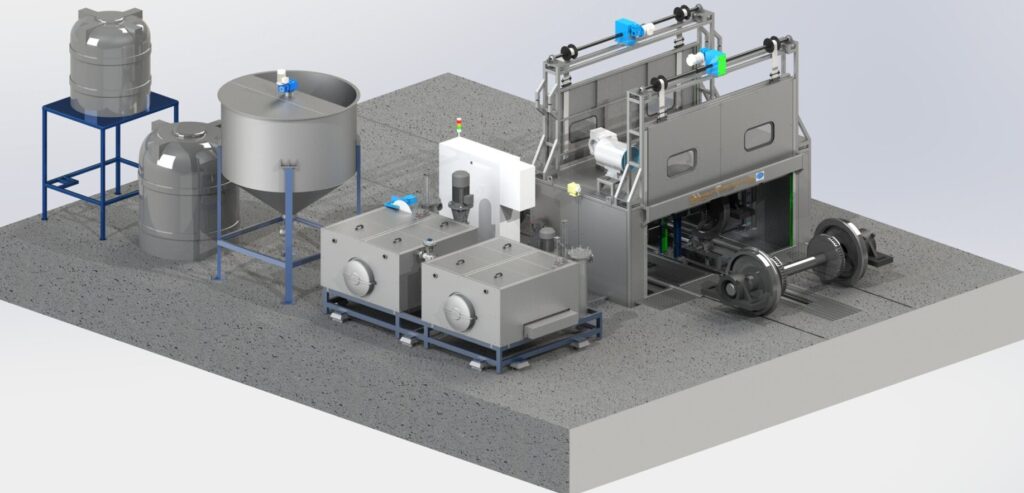
A rail wheelset washing plant is a specialized automated system designed to clean railway wheelsets (wheel-axle assemblies) before inspection, maintenance or rebuild operations. These plants remove brake dust, grease, oil and contaminants from wheel treads, flanges, axles and bearing housings, ensuring defects are visible during inspection and maintaining safe railway operations.
Configured as an automatic wheelset washing plant, the system delivers high-pressure, programmable cleaning cycles that replace manual scrubbing, accelerate turnaround and support predictive maintenance programs across Indian Railways, metros and transit depots.
What Is a Wheelset Washing Plant?
A wheelset washing plant is an enclosed or semi-enclosed system equipped with high-pressure spray jets, oscillating nozzles and rotating platforms that clean all surfaces of a railway wheelset. The wheelset is positioned in the wash chamber, and automated wash, rinse and drying cycles run without manual intervention.
As a rail wheelset cleaning plant, it provides:
- Thorough cleaning of wheel treads, flanges, axle journals, bearing seats and brake disc surfaces.
- Hot water and detergent dosing for effective removal of caked-on brake dust and grease.
- Water recycling and filtration to reduce consumption and environmental impact.
This automation ensures consistent cleanliness, faster inspection readiness and reduced labour compared to manual washing.
Rail Wheel Cleaning – Why It Matters
Proper rail wheel cleaning is critical in railway maintenance because:
- Inspection accuracy: Clean wheel treads and flanges allow inspectors to detect cracks, spalling, flat spots and wear patterns during visual and ultrasonic (UT) inspections.
- Safety: Removing contaminants from bearing seats and axle journals prevents false readings and ensures proper bearing installation.
- Efficiency: Clean wheelsets reduce cleaning time from hours to minutes, speeding up maintenance cycles and reducing depot downtime.
An automatic wheelset washing plant standardizes rail wheel cleaning across all wheelsets, ensuring every unit meets inspection readiness standards.
Automatic Wheelset Washing Plant – How It Works
An automatic wheelset washing plant operates through the following stages:
- Loading: The wheelset is positioned on a turntable, roller conveyor or rail track inside the wash chamber, either manually via crane or automatically via transfer system.
- Pre-Wash: High-pressure water jets (50–100 bar) remove loose brake dust, dirt and bulk contaminants from wheel treads, flanges and axles.
- Main Wash: Hot water (60–80 °C) mixed with industrial detergent is sprayed through oscillating or rotating nozzles, targeting all wheelset surfaces including: Wheel treads and flanges, Axle journals and bearing seats, Brake disc surfaces, Hub and spoke areas
- Rinse: Fresh water rinse removes detergent and suspended contaminants, preparing the wheelset for inspection or storage.
- Drying (Optional): Blow-off nozzles or hot air drying reduce moisture, preventing rust and allowing immediate inspection.
The entire cycle is PLC-controlled, with adjustable pressure, temperature and time for different wheelset types and contamination levels.
Rail Wheelset Washing Plant – Key Features
A well-engineered rail wheelset washing plant includes:
- High-pressure spray system: 50–150 bar with oscillating, rotating or robotic nozzles for complete coverage of wheel and axle geometries.
- Turntable or roller conveyor: Rotates wheelset during cleaning for uniform coverage of all surfaces.
- Hot water and steam heating: Heated wash solutions (up to 80 °C) for effective degreasing and removal of caked brake dust.
- Water recycling system: Filtration, sedimentation and oil separation recycle water, reducing consumption by 60–70%.
- PLC + HMI control: Programmable recipes for different wheelset types (passenger, freight, metro, locomotive) with data logging.
- Stainless steel construction: Corrosion-resistant chambers and piping for long service life in wet depot environments.
These features make the wheelset washing plant efficient, reliable and compliant with railway maintenance standards.
Rail Wheelset Washing Plant – Typical Specifications
Specification | Value (example) | Notes |
System type | Enclosed/semi-enclosed wheelset washing plant | Turntable or conveyor configuration |
Capacity | 8–16 wheelsets per 8-hour shift | Depends on cycle time |
Wheelset types | Passenger, freight, metro, locomotive wheelsets | Universal or custom fixtures |
Cleaning method | High-pressure oscillating/rotating spray jets | 360° coverage |
Water temperature | 60–80 °C | Hot water / steam heating |
Detergent dosing | Automatic dosing system | Industrial alkaline/neutral detergents |
Cycle time | 20–40 minutes per wheelset | Wash + rinse + optional drying |
Water recycling | recirculation | Multi-stage filtration |
Controls | PLC + HMI with recipes and alarms | Data logging for maintenance records |
Construction | Stainless steel chamber and spray manifolds | Corrosion-resistant |
Wheelset Washing Plant – Applications
A wheelset washing plant is essential in:
- Indian Railways: Wheel lathe shops, bearing overhaul facilities and wheelset maintenance depots for passenger and freight car maintenance.
- Metro systems: Periodic wheelset removal and cleaning for metro car preventive maintenance programs.
- Transit and light rail: Wheelset cleaning before ultrasonic inspection in urban transit maintenance facilities.
- Wheelset rebuild plants: Deep cleaning before disassembly, inspection, machining and refurbishment.
By using an automatic wheelset washing plant, railway operators improve inspection quality, reduce manual labour and maintain safety-critical wheel-axle assemblies more effectively.
Benefits of an Automatic Wheelset Washing Plant
Implementing an automatic wheelset washing plant provides clear operational and safety benefits:
- Improved inspection accuracy: Clean wheel treads and axles allow maintenance crews to detect cracks, wear and defects during visual and ultrasonic (UT) inspections.
- Labour and time savings: Automated rail wheel cleaning replaces manual scrubbing, reducing cycle time from hours to 10–20 minutes per wheelset.
- Water conservation: Recycling systems cut water consumption by 60–70% compared to manual hose washing.
- Worker safety: Enclosed operation reduces operator exposure to high-pressure spray, chemicals and heavy lifting.
- Consistent quality: PLC-controlled cycles ensure every wheelset receives the same thorough cleaning, regardless of operator or shift.
Frequently Asked Questions
What is the difference between a wheelset washing plant and a bogie washing plant?
A wheelset washing plant cleans individual wheel-axle assemblies (wheelsets) after removal from the bogie, focusing on wheel treads, flanges and axle journals for inspection. A bogie washing plant cleans entire bogie frames with wheelsets attached. Some facilities use combined bogie and wheelset washing plants.
How long does it take to clean one wheelset in an automatic wheelset washing plant?
A typical automatic wheelset washing plant completes a full wash, rinse and optional drying cycle in 10–20 minutes per wheelset, depending on contamination level and configuration. This allows 8–16 wheelsets to be cleaned per 8-hour shift.
Can one rail wheelset cleaning plant handle different wheelset types?
Yes. Modern rail wheelset cleaning plants use PLC control with multiple programmable recipes to accommodate passenger car wheelsets, freight wagon wheelsets, metro wheelsets and locomotive wheelsets. Spray patterns, pressure, temperature and cycle times are adjusted per wheelset type.
What contaminants can a wheelset washing plant remove?
A wheelset washing plant can remove brake dust, grease, oil, rust, scale, dirt and caked-on contaminants from wheel treads, flanges, axle journals, bearing seats and brake disc surfaces. Hot water and detergent enhance cleaning performance on heavily soiled wheelsets.
Where can I find rail wheelset washing plant manufacturers in India?
Ultramax Hydrojet manufactures rail wheelset washing plants and automatic wheelset washing plants for Indian Railways, metros and transit systems. We supply customized systems with water recycling, turntable rotation, PLC control and options for robotic cleaning. Contact us in Chennai for specifications and depot visits.