hydrojetuhpl@gmail.com |
 Reactor Cleaning Equipment
Reactor Cleaning Equipment for Pharmaceutical & Chemical Reactors
Reactor cleaning equipment comprises automated CIP systems, high-pressure jet cleaners and specialised tools designed to clean the interior surfaces, baffles, jackets and discharge zones of process reactors. Proper reactor cleaning is critical in pharmaceutical, API, chemical and biotech manufacturing to prevent cross-contamination, meet cGMP standards and ensure product quality.
Whether you operate stainless steel, glass-lined or hastelloy reactors, the right reactor cleaning equipment delivers repeatable, validated cleaning with minimal manual intervention and downtime.
What Is Reactor Cleaning Equipment?
Reactor cleaning equipment includes any system or device used to remove residues, scale, product build-up and contaminants from reactor vessels. Common types include:
- CIP (Clean-In-Place) systems with fixed or rotary spray heads for automated reactor cleaning.
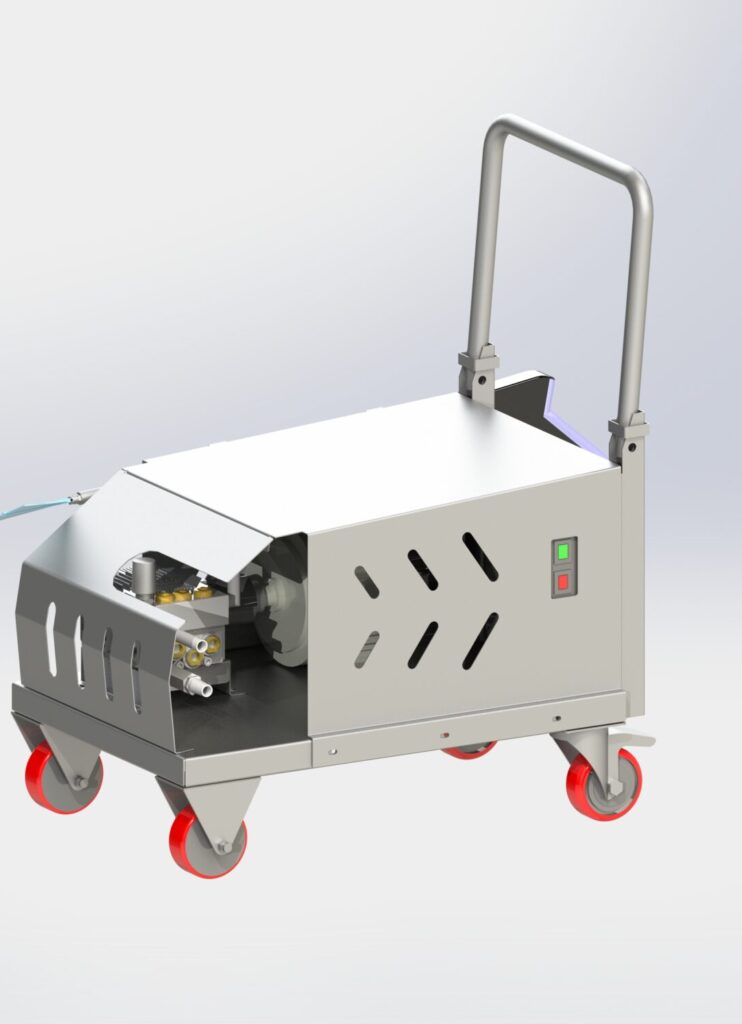
- High-pressure reactor jet cleaners (mobile or skid-mounted) for manual-directed cleaning of stubborn deposits.
- Orbital or rotary spray balls that provide 360° coverage inside the vessel.
- Manual lances, brushes and inspection tools for maintenance cleaning or difficult geometries.
Selection depends on reactor size, material of construction, contamination type and whether cleaning must be validated for regulated environments.
Glass Lined Reactor Cleaning – Special Considerations
Glass lined reactor cleaning requires extra care to avoid damaging the glass enamel coating. Standard practices include:
- Use of moderate pressure (typically below 100 bar) and appropriate nozzle distance.
- Soft cleaning chemicals compatible with glass lining (avoiding strong alkalis or acids that can attack glass).
- Rotary or orbital spray devices rather than fixed high-impact jets to distribute force evenly.
Proper reactor cleaning equipment for glass-lined vessels ensures thorough cleaning while preserving the integrity of the glass surface, which is critical for product purity and equipment longevity.
Reactor CIP Systems for Automated Cleaning
A reactor CIP system is the most common form of automated reactor cleaning equipment in pharmaceutical and chemical plants. It typically includes:
- Tanks for cleaning solution, rinse water and optional sanitiser.
- High-capacity pumps and spray devices (fixed balls, rotary jets or orbital cleaners) mounted inside the reactor.
- PLC control for programmable cycles (pre-rinse, caustic wash, acid wash, final rinse, etc.).
This automation ensures consistent reactor cleaning performance, supports validation and reduces operator exposure to chemicals and confined spaces.
Reactor Jet Cleaners for Manual High-Pressure Cleaning
Reactor jet cleaners are mobile high-pressure units with long lances or hoses that operators direct into reactors for targeted cleaning. They are ideal when:
- CIP coverage is insufficient for heavily fouled zones or baffles.
- Reactors are not equipped with permanent spray devices.
- Maintenance or deep cleaning is required between campaigns.
A reactor jet cleaner provides flexible, on-demand cleaning with pressures ranging from 100 to 500 bar, depending on the material and contamination.
Reactor Cleaning Equipment – Typical Specifications
Specification | Value (example) | Notes |
System type | CIP / High-pressure jet / Orbital spray | Depends on reactor design |
Pressure range | 3–500 bar | CIP (low), jet cleaners (high) |
Spray devices | Fixed balls, rotary jets, orbital cleaners | For glass lined reactor cleaning use gentle patterns |
Temperature | Ambient to 90 °C | Heated cleaning solutions |
Materials | Stainless steel, PTFE, hastelloy (wetted parts) | Compatible with pharma/chemical |
Benefits of Proper Reactor Cleaning Equipment
Investing in the right reactor cleaning equipment provides clear operational and compliance benefits:
- Regulatory compliance: Validated CIP or documented manual cleaning supports cGMP, FDA and EU inspections.
- Faster batch changeovers: Automated reactor cleaning reduces downtime between products or campaigns.
- Product quality: Thorough cleaning prevents carryover and cross-contamination, protecting batch quality and patient safety.
- Operator safety: Automated systems and long-lance jet cleaners reduce the need for confined-space entry.
Frequently Asked Questions
What types of reactors can be cleaned with reactor cleaning equipment?
Reactor cleaning equipment can be configured for stainless steel, glass-lined, hastelloy and other specialty alloy reactors used in pharmaceutical, API, chemical and biotech manufacturing. Each system is tailored to the reactor material, size and contamination type.
How is glass lined reactor cleaning different from stainless steel reactor cleaning?
Glass lined reactor cleaning requires lower pressures, softer spray patterns and compatible chemistry to avoid damaging the glass enamel. Stainless steel reactors can tolerate higher pressures and more aggressive cleaning, making reactor jet cleaners with 200+ bar suitable.
Can reactor cleaning be validated for cGMP?
Yes. Both CIP systems and documented high-pressure cleaning with reactor cleaning equipment can be validated. CIP systems provide automated cycles with recorded parameters (time, temperature, flow, conductivity), while manual jet cleaning can be validated with SOPs, operator training and cleaning verification (swabs, TOC, etc.).
What is the difference between CIP and reactor jet cleaners?
CIP is an automated, in-place system with fixed spray devices and programmable cycles, ideal for routine reactor cleaning between batches. Reactor jet cleaners are mobile high-pressure units with manual lances, used for deep cleaning, stubborn residues or reactors without CIP infrastructure.
How do I choose the right reactor cleaning equipment?
Selection depends on reactor size and material, contamination type (light oils vs caked solids), cleaning frequency, whether cleaning must be validated, and whether the area is classified (requiring flame-proof equipment). Consult with the equipment manufacturer to define the best CIP, jet or hybrid solution.