hydrojetuhpl@gmail.com |
 Robotic Washing Machine
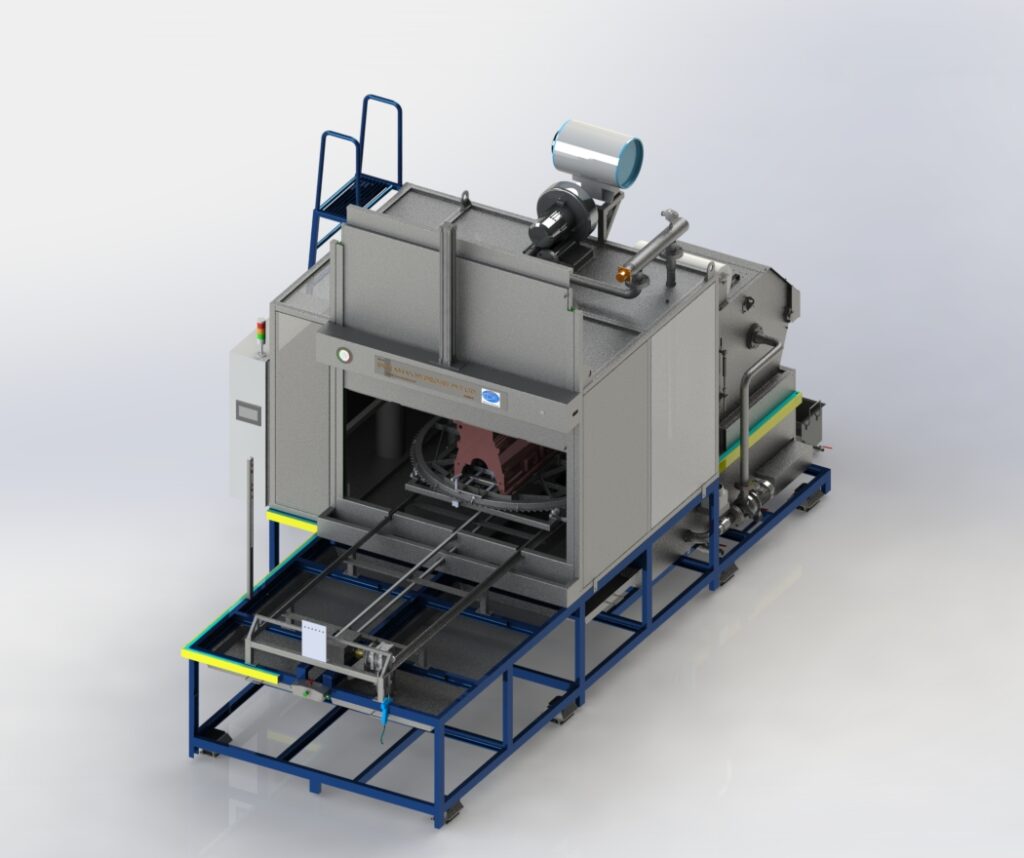
Robotic Washing Machine for Fully Automated Parts Cleaning
A robotic washing machine combines an industrial cleaning system with one or more robots to automate loading, unloading and precise positioning of parts inside the washer. Instead of fixed racks or manual handling, the robot presents each component to the wash, rinse and drying zones in the optimal orientation.
This approach turns the installation into a highly flexible robotic parts washer, ideal for complex components, high‑mix production and applications where cleanliness, consistency and traceability are critical.
What Is a Robotic Washing Machine?
In a robotic washing machine, a six‑axis robot or gantry manipulator interfaces with an industrial parts washer machine such as a cabinet, cell or multi‑station line. The robot can:
- Load and unload baskets, fixtures or conveyors.
- Move parts through different positions inside the spray zone.
- Present specific surfaces to the nozzles for focused cleaning.
By synchronising robot motion with the wash cycle, the system acts as an automated parts washer with very high repeatability and minimal manual intervention.
Benefits of a Robotic Parts Washer vs Conventional Systems
A robotic parts washer offers several advantages over traditional manual or fixed‑rack machines:
- Full automation: The robot handles all loading and unloading, reducing labour and ergonomics issues.
- Flexible handling: Different part families can be processed with recipe changes instead of hard tooling changes.
- Improved coverage: Robot motion can expose blind holes, complex surfaces and deep cavities more effectively than static fixtures.
When built as a heavy duty parts washer, the system can also manage large components or high‑throughput lines without sacrificing cleanliness.
Typical Applications for Robotic Washing Machines
A robotic washing machine is ideal when you clean complex or heavy components in medium to high volumes:
- Machined components with multiple critical surfaces.
- Large castings, housings or sub‑assemblies requiring targeted parts cleaning machine action.
- Automated cells where machining, deburring and washing are integrated around a common robot.
The same cell can serve as a component washer for different part numbers, using stored programs and end‑of‑arm tooling specifically designed for each part family.
Robotic Washing Machine – Typical Specifications
|
Specification |
Value (example) |
Notes |
|
System type |
Robot-integrated robotic washing machine |
Cell layout or inline |
|
Robot type |
6-axis industrial robot (payload 20–200 kg) |
Based on part weight |
|
Washer type |
Cabinet / cell / multi-station parts cleaning machine |
Custom |
|
Load capacity |
Customizable |
For heavy duty parts washer duty |
|
Process stages |
Wash / Rinse / Blow‑off / Dry (1–5 stages) |
Recipe‑controlled |
|
Spray pressure |
5- 50 bar (adjustable) |
High‑impact cleaning |
|
Pump capacity |
5–30 m³/hr per stage |
Continuous duty |
|
Heating system |
Electric heaters |
For hot aqueous washing |
|
Operating temperature |
55–75 °C |
PLC‑controlled |
|
Filtration |
Multi‑stage filtration, chip removal |
Protects nozzles and parts |
|
Controls |
Integrated robot + PLC/HMI |
Central recipes and diagnostics |
|
Safety |
Fencing, interlocks, light curtains |
Compliant with safety standards |
Why Choose a Robotic Parts Washer System?
Choosing a robotic washing machine is about more than adding a robot; it’s about designing a complete industrial parts washer machine that can:
- Handle multiple part types without complex changeover.
- Interface with upstream CNC machines, deburring and measuring stations.
- Deliver repeatable cleanliness with full process data for audits.
With a properly engineered automated parts washer cell, you gain stable cycle times, reduced handling damage, and a platform that can scale as volumes or part mixes change.
Frequently Asked Questions
When should I use a robotic washing machine instead of a standard washer?
Use a robotic washing machine when you have complex or heavy parts, multiple part variants, or when you want to integrate washing into a fully automated cell. If your process is simple and low‑mix, a conventional industrial parts washer machine may be sufficient; but when flexibility and precision handling matter, a robotic parts washer is the better choice.
Can a single robotic parts washer handle different components?
Yes. A single robotic parts washer can handle multiple components by using different robot programs, grippers and fixtures. The control system stores recipes that define robot paths and washer parameters, turning the cell into a flexible component washer for multiple part families.
How does automation improve cleaning quality?
Automation improves quality by ensuring each part follows the same path, at the same speed, with the same spray angles and times. A fully automated parts washer removes operator variability and ensures every part spends the correct time in each stage, improving consistency and first‑pass yield.
Is a robotic washing machine suitable for heavy components?
Yes. With an appropriate robot payload, fixtures and mechanical design, the system can operate as a heavy duty parts washer for large castings or assemblies. Load ratings, reach and cycle times are engineered to match your heaviest parts, while keeping motion safe and controlled.
What changes are required to upgrade an existing washer to a robotic cell?
In many cases, an existing parts cleaning machine or cabinet can be integrated into a robotic cell by adding a robot, safety fencing, and controls integration. The robot takes over loading/unloading and part positioning, while the washer performs the cleaning cycle, effectively turning the setup into a robotic washing machine without replacing the entire system.