hydrojetuhpl@gmail.com |
 Train Coach Washing Plant
Train Coach Washing Plant for Automated Train Exterior Cleaning
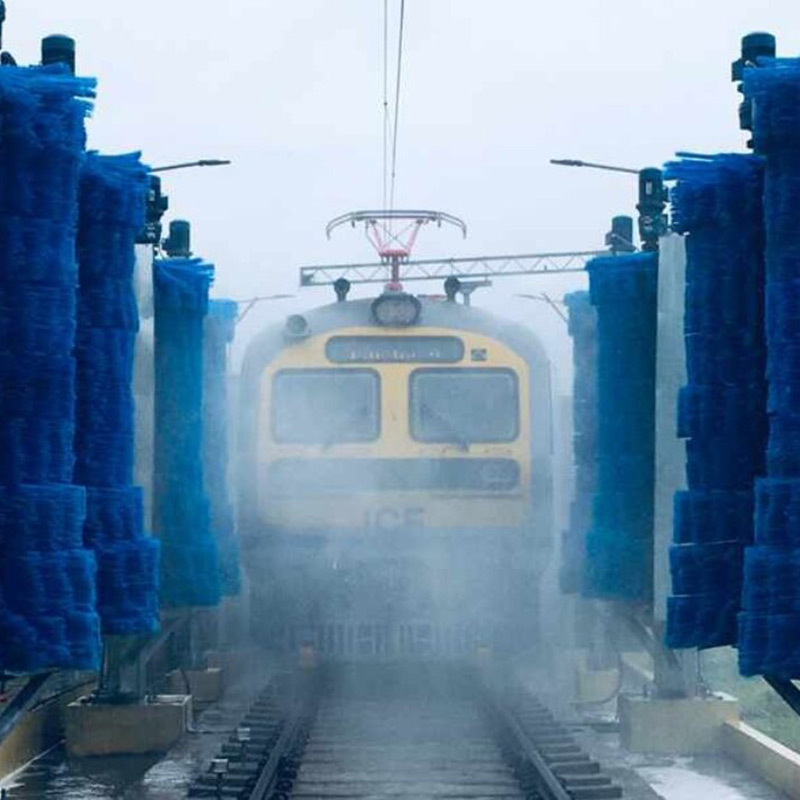
A Train Coach Washing Plant is an automated system designed to wash the exterior of passenger coaches, locomotives, metro trains and transit vehicles as they pass through multiple cleaning stages. These plants remove dirt, dust, grease, brake dust and environmental contaminants, maintaining fleet appearance, improving passenger experience and ensuring safety inspections can be performed on clean surfaces.
Configured as an automatic train washing system, the plant delivers high-throughput, water-efficient cleaning for 8–24 coaches in 10–15 minutes, with water recycling systems that save 60–70% water compared to manual washing.
What Is a Train Washing Plant?
A train washing plant is a pass-through system in which trains enter at one end and exit fully washed at the other. The plant consists of multiple arches or gantries with rotating brushes, high-pressure spray nozzles, detergent dosing and drying systems.
As a coach washing plant, it provides:
- Pre-rinse to remove loose dirt and dust.
- Detergent application via spray or foam for deep cleaning.
- Brush or high-pressure washing of coach sides, roofs and ends.
- Fresh water rinse to remove detergent and residues.
- Optional air blow-off drying for faster turnaround.
This automation makes the train cleaning plant fast, repeatable and suitable for daily or shift-based cleaning operations.
Train Coach Washing Plant – Key Features
A well-designed train coach washing plant includes:
- Multi-arch configuration: Separate arches for pre-rinse, detergent, brushing, rinse and drying, providing complete cleaning coverage.
- Rotating brushes: Soft or medium brushes for coach sides, roof and ends, designed not to damage paint or decals.
- High-pressure spray nozzles: 30–100 bar spray for underframe and wheel cleaning.
- Water recycling system: Multi-stage filtration, sedimentation and oil separation recycle 60–70% of water, reducing consumption.
- Detergent dosing: Automatic proportioning pumps for consistent cleaning performance.
- PLC + HMI control: Programmable cycles for different train types with data logging and maintenance alerts.
- Weather protection: Covered structure for year-round operation.
- These features make the automatic train washing system efficient, reliable and environmentally sustainable.
Train Coach Washing Plant – Typical Specifications
Specification | Value (example) | Notes |
System type | Pass-through Train Coach Washing Plant | Multi-arch automated system |
Capacity | 8–24 coaches in 10–15 minutes | Depends on train length |
Washing stages | Pre-rinse / Detergent / Brush / Rinse / Dry | 3–5 arches |
Train types | Passenger coaches, locomotives, metro, freight | Universal or custom |
Brush type | Rotating vertical and horizontal brushes | Soft or medium bristles |
Operating pressure | 30–100 bar | For spray and rinse stages |
Water consumption | 60–70% savings vs manual washing | With recycling system |
Water recycling | Multi-stage filtration and oil separation | Closed-loop system |
Automatic Train Wash Plant Manufacturers – What to Look For
When evaluating automatic train wash plant manufacturers, consider:
- Experience: Track record with Indian Railways, metros and transit systems.
- Water efficiency: Plants with recycling systems save 60–70% water, critical for environmental compliance.
- Customization: Ability to configure arch count, brush types and cycles for your specific train fleet.
- Support and spares: Local service support and spare parts availability for minimizing downtime.
- Compliance: Systems meeting Indian Railways specifications and environmental discharge norms.
Ultramax Hydrojet is a leading automatic train wash plant manufacturer in India, serving Indian Railways, metros and transit systems with custom-designed washing plants.
Applications – Where Train Coach Washing Plants Are Used
A train coach washing plant is essential in:
- Indian Railways: Coach depots, pit lines and maintenance yards for daily or periodic passenger coach cleaning.
- Metro systems: Daily washing of metro train exteriors for Delhi Metro, Mumbai Metro, Bangalore Metro and other urban transit systems.
- Locomotive sheds: Cleaning of diesel and electric locomotives between runs or during maintenance.
- Freight and transit facilities: Washing of goods wagons and transit cars.
By using train cleaning machines, railway operators improve fleet appearance, reduce water use and maintain consistent cleaning standards across all trains.
Benefits of an Automatic Train Washing System
Implementing an automatic train washing system offers clear advantages:
- Water conservation: Recycling systems save 60–70% water compared to manual hose washing.
- Labour savings: Automated systems reduce manual cleaning crews and speed up turnaround, allowing more trains to be cleaned per shift.
- Consistent quality: Programmable cycles ensure every train receives the same thorough cleaning, improving passenger experience.
- Faster turnaround: Cleaning 8–24 coaches in 10–15 minutes vs hours for manual washing.
- Environmental compliance: Wastewater treatment and oil separation meet environmental discharge regulations.
- Improved safety: Clean train exteriors make safety inspections easier and enhance public perception.
Frequently Asked Questions
What is a Train Coach Washing Plant?
A Train Coach Washing Plant is an automated pass-through system that washes the exterior of train coaches, locomotives and metro trains using rotating brushes, high-pressure spray, detergent and rinse cycles. Trains enter at one end and exit fully washed at the other in 10–15 minutes.
How much water does an automatic train washing system save?
An automatic train washing system with water recycling saves 60–70% water compared to manual hose washing. Filtered and treated water is reused for pre-rinse and wash cycles, with only final rinse requiring fresh water.
Can one train washing plant handle different train types?
Yes. Modern train washing plants use PLC control with multiple programmable recipes to handle passenger coaches, diesel locomotives, electric locomotives, metro trains and freight wagons. Brush patterns, pressure, detergent and cycle times are adjusted per train type.
How many coaches can be cleaned per hour?
A high-capacity coach washing plant can clean 8–24 coaches in 10–15 minutes, allowing 40–100+ coaches per 8-hour shift depending on train length and configuration. This is significantly faster than manual washing.
Who are the leading automatic train wash plant manufacturers in India?
Ultramax Hydrojet is a leading automatic train wash plant manufacturer in India, supplying train coach washing plants, automatic train washing systems and train cleaning machines to Indian Railways, metros and transit systems across India. Contact us in Chennai for specifications, site visits and turnkey installation.